Wednesday, May 23, 2012

Not Non-Fiction

I have a Master’s Degree from the University of Iowa Nonfiction Writing Program, and for the past 20 years I’ve taught a course in Literary Nonfiction (a course that I developed). A constant frustration I encounter, whether from students, administrators, other faculty, bookstores, libraries, or Wikipedia, is the misspelling of nonfiction as the hyphenated “non-fiction.” In none of the dictionaries I have is nonfiction spelled with a hyphen. And there is no reason for doing so. Yes, there are some compound terms (not words) that require a hyphen with the non- prefix:  non-faculty, non-student, non-thinking, non-Hodgkin’s lymphoma, non-prefix. But the overwhelming majority of words (not negative compounds) that have a non prefix do not have a hyphen: nonachiever, nonaddictive, nonbeliever, nondeductible, nonessential, noninvasive, nonkosher, nonlethal, nonobjective, nonlinear, nonprofit, nonresistant, nonresponsive, nonsense, nonsmoker, nontoxic, nonviolent (I could go on) – and oh yes, nonfiction.

When I confront others (students, colleagues, librarians) with this misspelling, I’m usually branded a nitpicker (not nit-picker). But as someone who writes and teaches literary nonfiction, it’s something of a sore point with me. The literary nonfiction genre is problematic in its naming. It requires the adjective “literary” to distinguish it from non-literary (another acceptable use of the non-hyphen) nonfiction – most journalism, science writing, history, biography, et al. Some people use the term creative nonfiction, and that’s not offensive, but it implies that other nonfiction prose is not (or non-) creative, and as I try to teach my students, all writing – even the thoughtful shopping list or suicide note – has creative potential. (Take William Carlos Williams’ note to his wife: “I have eaten / the plums / that were in / the icebox // and which you / were probably / saving / for breakfast // Forgive me / they were delicious / so sweet / and so cold”) The essential quality that defines literary nonfiction is the use of literary techniques – plot, character, setting, imagery, figurative and poetic language, etc. – in telling a nonfiction story, describing an actual person or place, or reflecting on an experience or idea. As Virginia Woolf writes in “The Modern Essay”: “The principle that controls it is simply that it should give us pleasure . . . The essay must lap us about and draw its curtain across the world.” (Note her use of metaphor; her essay about the essay is a literary essay.) The most salient characteristic of the genre is not that it’s actual, but rather that it’s aesthetic.

The problem with the term literary nonfiction (or creative nonfiction) is that it requires an adjective to distinguish this genre from other nonfiction genres. Fiction, poetry, and drama don’t have this problem. Why was “nonfiction” selected to designate this fourth genre? Why not “nonpoetry”? “nondrama”? It’s prose, of course, and often involves narrative, character, and setting, so it most often resembles fiction. (It’s often difficult to distinguish between first-person realistic fiction and first-person narrative nonfiction, if they aren’t labeled.) But tacking on the non- prefix to fiction instead of coming up with a wholly different term, forever relegates literary nonfiction as a negative – it’s not fiction – and thereby sublimates it as a genre. Many have tried in vain to come up with an alternative term, but nothing has of yet taken. At the very least we should dump the hyphenated misspelling of the term, as it only emphasizes the genre’s sublimation. Or maybe we could just start referring to fiction as non-nonfiction.

Sunday, May 20, 2012

Looking Buggy

I’ve never been a flyfisher who matched the hatch, that is, identified the insects that were hatching at any one time and that the fish were feeding on, and then tied on a fly that mimicked that insect to fool the trout into taking it. For one thing, the waters I fish don’t seem to have all that many hatches, at least not that I’ve encountered. And even when they do I can’t see what the fish are rising to, and even if I could I wouldn’t know what kind of bug I was looking at. On the one or two occasions a year I do stumble into a hatch, I just tie on whatever’s the easiest for me to see on the water; sometimes it works, sometimes it doesn’t. But the far majority of the time, I fish nymphs below the surface. And the nymph pattern I use most – probably 80%-90% of the time, any time of the year – is the muskrat nymph, the first fly I learned to tie, and the easiest. It’s simply a #18 to #12 nymph hook, with black thread, dubbed gray muskrat fur body (guard hairs picked out), and a peacock herl thorax. For the past 10 years or so I’ve added a brass bead’s head to add weight and attraction. My understanding is that the fly is used most often in the waters of Pennsylvania. I’ve never seen it in fly bins here in the Midwest, and a few years ago, when I needed a new muskrat pelt I finally found one in a fly shop in St. Louis, where the owner had a large one stowed away in the back, which he just gave to me gratis, having no use for it himself. I’ve since used maybe 10% of the pelt on maybe 100 muskrat nymphs, and will probably die before I can use up even half of the remaining fur. I don’t know if the fly is supposed to imitate any particular insect, but my guess is that it is good at simply “looking buggy,” the primary criterion identified by a cousin of mine who first instructed me in fly tying. I imagine the wispy fur of the body in the drift, the translucent glow of the peacock herl in the sun, the shine of the brass bead’s head work together to look sufficiently buggy. It’s at least worked well for me. And is always a reminder of what may well be a primal truth – that simple is best. Or to quote Thoreau from another context, "Simplicity, simplicity, simplicity." Though buggy is good too.

Tuesday, May 15, 2012

A Mediocre Flyfisher

I’m at best a mediocre flyfisher in my home waters of the Driftless Area of the upper Midwest. I catch some fish on most outings, no fish on an occasional outing, and very occasionally I have an outing where I seem to do no wrong (or blind luck more likely). I’ve been on several western waters, and except for a couple of guided trips, have generally done little but whip the water into a froth. I do little different now than when I first started flyfishing some 25 years ago. I use the same few flies, three nymphs and a couple of dry flies when (seldom) the fish are feeding on top. They seem to work okay, and I’ve never been one able to match the hatch (identify the food the fish are eating and use a fly that mimics it; I can neither identify what they’re eating or usually have the fly that mimics it). But my fishing has never been motivated by catching fish, either number or size. Of course catching fish – and the occasional 12”+ fish – helps keep me going, not a goal so much as an object. If I never caught a fish I wouldn’t go out again. But most of why I fish is just to get out on the water, on the streams, in the quiet of running water and bird song, wind in the trees and sun on the riffles, the deer and the muskrats. The silence and the solitude. The escape and the promise.

Friday, May 11, 2012

For Sale Sign Prank of 1966

In the summer of 1966, between my junior and senior years in high school, Gary Matassarin, Chris Christian, and I spent the night with our friend Foster Smith at I guess what might be called a slumber party. Foster’s mother fixed us something for dinner (I can’t remember what), we watched TV until it went off the air (yes, children, there were only three TV channels at the time, and they all went off the air between 11:00 p.m. and midnight), and then played card games. Sometime in the middle of the night we decided to go out in Foster’s car (a large Chevy or Buick as I recall), take For Sale signs from in front of dozens of houses on the east side of Wichita, load them in the trunk, and then replant them en masse in the front yard of Sally White’s parents’ house. Her father spent most of the next day, a Saturday, phoning realtors and grilling Sally about who the perpetrators might be. Of course, it wasn’t hard for her to figure it out, and we were required to return all of the signs to their proper homes. In the end, I think Mr. White actually seemed to appreciate our little in-the-dark-of-the-night prank.

I recall this youthful indiscretion in light of one of Mitt Romney’s high school (well, prep school) pranks that was reported in yesterday’s Washington Post:  About a year before my own transgression, the young Mitt led of a group of like-minded cohorts to chase down and tackle a classmate, who was effeminate (the term back then was faggot, not gay), had bleached his hair blonde and grown it long over one eye, and just generally made Mitt uncomfortable (“He can’t look like that. That’s wrong. Just look at him!” he’s remembered saying at the time). So as the hapless, pinned classmate cried and screamed for help, Mitt wielded a pair of scissors and proceeded to cut his offending hair.

Of course there are two major differences between our two “pranks” (as Mitt refers to his actions). First, mine was actually a prank – Mitt’s was assault. And if it happened today, it would be prosecuted as a hate crime. Second, Mitt can’t recall the event at all. Apparently he participated in any number of such “pranks” and “hijinks” back in those days, so asking him to remember any one of them would be too much to ask. But he does say that if he did it, and if anyone was hurt by it, then he’s sorry. He sure is. It begs credulity that Romney can’t recall this incident. He’s either lying, or he lacks empathy and shame. “What a stupid, senseless, idiotic thing to do,” one of his accomplices now says. (He remembers.) “It was a hack job. It was vicious,” another recalls. (He also remembers.)

In a way I envy Romney. He’s able to simply wipe out all recollection of any embarrassing past events. Meanwhile, I’ll probably go to my grave haunted by the memory of the For Sale sign prank of ‘66.

Tuesday, May 8, 2012

Lido di Ostia

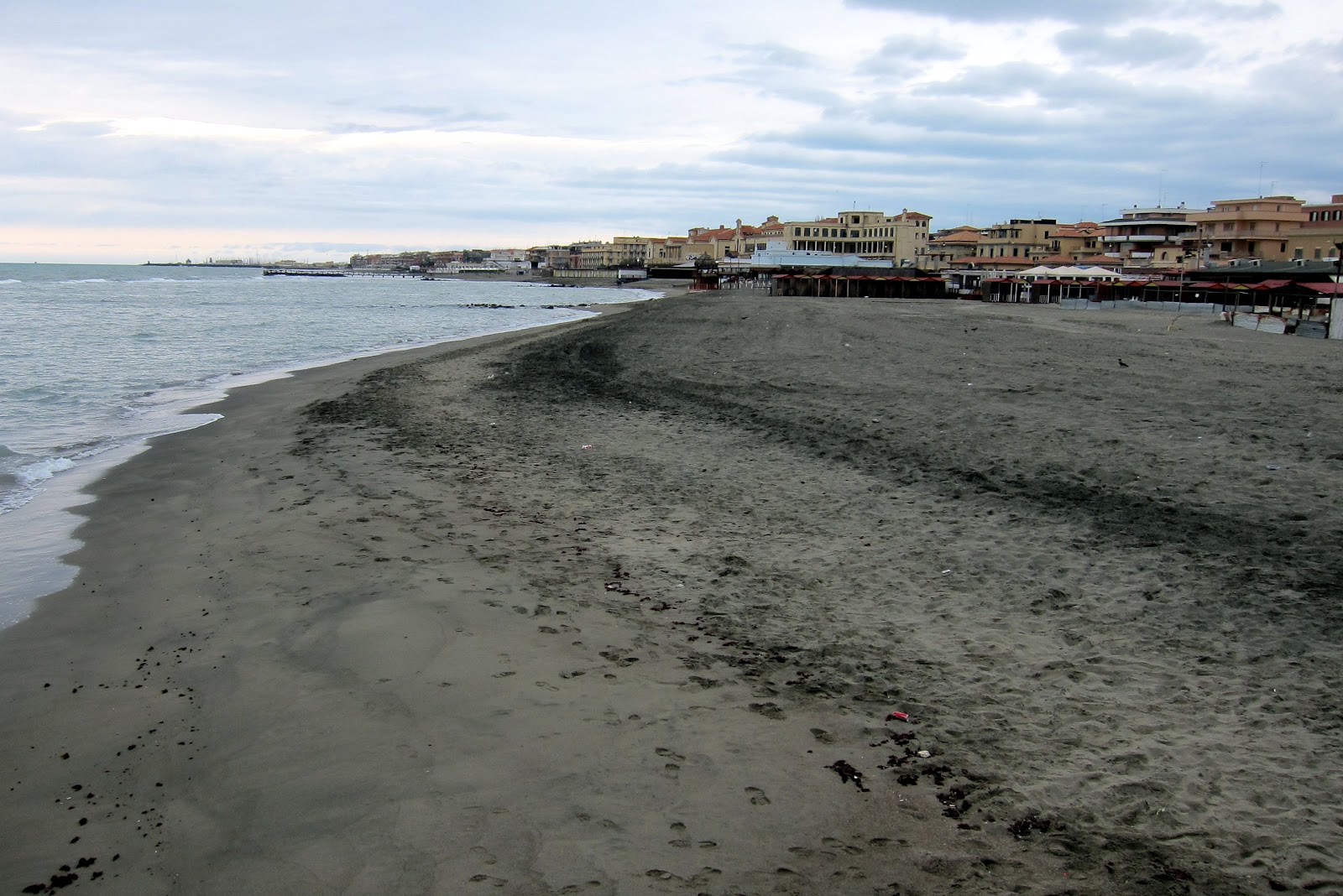
We spent our last night in Italy in Lido di Ostia, a resort town at the end of the line about 30 miles west of Rome, a metro ride from the Termini station and transfer to a train, maybe an hour’s trip total. The primary reason was that our hotel, the Belvedere Century, was near the airport (15 minute shuttle), so we wouldn’t have to wake early our last morning and hassle with luggage from the hotel to train station to airport. But Lido di Ostia is also a popular beach resort, apparently crowded during the summer months, and we thought there might be interesting restaurants and things to do there. But those assumptions did not turn out to be realized. For one thing it is a summer resort and we were there in April. It was essentially deserted. The beach was empty, the umbrellas and changing rooms shoved up in storage against the main road. A number of the hotels and restaurants looked to be closed for the season. Only a few locals, teenagers looking for something to do and older people looking for someone to talk with, ventured out on the outdoor mall across from our hotel. When we checked in, the desk clerk seemed bothered by our interruption of his surfing the net. As far as we could tell there were maybe five other rooms occupied for the night. We walked out on a pier from the beach, a few others huddled in coats in the wind and overcast, slate-gray sky. The whole feel was Coney Island in February. We wandered about and finally found a restaurant that turned out to be not that bad (though we were the only customers, perhaps of the whole night; the young waiter was more interested in the soccer game on the TV than on how we were doing). And ironically the hour we were to save by being close to the airport turned out not to exist. The shuttle left at 8:00 and 10:00, and we wanted to leave at 9:00 for an 11:30 plane. So we ended up having to take the 8:00, about the same time we would have had to leave a hotel in Rome had we stayed there, with the choice of restaurants, ruins, and streets to roam the night before. Instead of the hour from the Rome Termini to the airport, we spent the hour biding our time in the airport. One lives, one learns. . . . Well, one lives.

Friday, May 4, 2012

Walking the Path From Ravello

We’d taken the bus in the morning up from Amalfi to Ravello, perched on a cliff 1000 feet above the Mediterranean, but decided to take the stairway-path back in the afternoon, not to be reminded of how old we are but rather to take advantage of the temporary good weather and enjoy the vistas promised on the climb down. But of course, despite the spectacular vistas, terraced gardens and orchards, stuccoed houses balanced on the rock cliffs, and centuries-old walls and staircases, we couldn’t help but be regularly reminded that we probably were too old to be doing this shit. Our Rick Steves’ Naples & the Amalfi Coast guidebook said that it would take 40 minutes from Ravello to Atrani (and then 15 minutes more to Amalfi). The young woman at the Tourist Information office in Ravello, where we got a map, pointed our way and said that it would take 30 minutes. It took us 90 minutes to get to Atrani. Of course, we did pause numerous times to take in and take pictures of the views, and we stopped a couple of times on well-placed benches. But mostly we were just slow. A couple of younger couples passed us on their way down, no doubt making the 30-40 minute time. And we met another young couple near Atrani just starting their way up. I joked, “You’re going the wrong way,” but they said they’d walked down that morning and were on their way back up to their hotel. Try that again in 40 years, I considered warning them. But while it took us longer than we’d thought, we weren’t in any hurry, there wasn’t any pain involved, there were no falls, and the views were impressive. And we rewarded ourselves with gelato in Atrani’s quiet, cool piazza. With age comes time to dawdle.

Wednesday, May 2, 2012

Eating the Amalfi Coast

It’s hard to eat poorly on the Amalfi Coast. Most of the osterias, trattarias, pizzarias, and ristorantes cater to tourists, but that doesn’t turn out to necessarily be a bad thing (as it can be elsewhere) as there are mostly tourists on the Amalfi Coast. Here’s our dining experience on our recent trip:

Amalfi

Pizzeria Donna Stella. On our first night in town we happened upon this wonderful place after discovering that Trattoria San Guiseppe’s, where I had eaten the first time in Amalfi (more in a moment), was closed for the day. We walked off the main street where most of the more touristy places are and wandered the maze of stair-streets before seeing a sign for Stella’s and decided to try it. There were only five other tables with diners in the small room – three with locals, one with a tourist couple (women from northern Europe?), and one with the young owners – a good sign. We shared a prosciutto and mushroom pizza and green salad, a carafe of house red wine, and a cream and blueberry dessert. It was all excellent.

Trattoria San Guiseppe’s. For lunch the next day we returned to this restaurant, one of my favorite from my trip several years ago. We shared a la Genovese pizza – tomato, mozzarella, tuna, and olives – just as good as I recalled, with a wonderfully caramelized thin crust. There were only two other tables, one with a large group of locals, the other a tourist family.

Ristorante Pizzaria Il Mulino. We had passed this restaurant on the upper end of the main street while visiting the Paper Museum, and while there was only one other table with one couple (tourists; and another tourist couple arrived after us), we decided it looked worth trying (by then we’d realized that most of the restaurants catered to tourists). And it was. We shared a mista de mare antipasta, Jac had a fresh spaghetti with vegetable sauce and cheese dish, and I had gnocchi with a tomato and cheese sauce. All accompanied by a Ravello wine (A. Sammarco rosso). Once again, all very good.

Ristorante Vittoria. The next morning we took the bus up to Ravello, did the spectacular Villa Cimbrone and Villa Rufolo and the Duomo di Ravello, and then searched the map we’d gotten at the Tourist Information office for a restaurant, and settled on the Ristorante Vittoria, near the piazza duomo, where we were. It was a bit unsettling to see the only tables in the place were two groups of loud Germans. But they left soon after we arrived. As we sat there, though, we were encouraged to see a number of apparently nearby shop owners or workers coming in to get take-out boxes. Jac had a pasta (fresh noodles) with clam sauce that was excellent, and I had catch-of-the-day fried seafood, a mix of shrimp, calamari, and three small whole fish, and a mixed salad, all very good. And we lingered over a carafe of the house white wine. A good meal, and good to sit for an hour after several hours of a lot of walking and another couple of hours of more walking as we hiked down the path from Ravello to Amalfi.

Il Tari. We’d passed this restaurant the past two nights and seen that it was nearly full, so we decided to try it on our last night in Amalfi, a Saturday night, and it was crowded with both tourists and locals. And again it turned out to very good: Jac had chicken picata, and I had a fixed price menu of antipasta (ham, mozzarella, tomato, and olives), chicken picata and salad, and pound cake with a lemon-cream sauce. And a shared carafe of house white. A nice last meal in Amalfi.

Positano

La Zagara. After a crowded bus ride from Amalfi to Positano, a long, confusing walk down a lot of steps to our hotel, checking in, walking down to Fornillo Beach, over to the main part of the town, wandering the step-streets, we decide to duck into this cafĂ© for lunch. It’s the dining mistake of the trip. We only learn later that it’s mainly a pastry place (and I guess a good one), but we head out onto the patio and order a pizzeta (Jac) and calzone (me). Neither is very good (and Jac gets something she didn’t order). But it’s an hour rest before more walking.

Hotel Pupetto. Our hotel, the Hotel Vittoria, shares this restaurant, located on Fornillo Beach, and since we got a 15% discount, we decided to make this our first dinner in Positano. And the restaurant is right on the beach, a hundred or so feet from the water. The waves were our background music (although the kids running around added their layer). As the sun set, a bat flew over our table, gorging on insects. A cat begged for food. Jac had spaghetti carbanara, and I had a fixed price meal of risotto and veal scaloppini, and we shared a carafe of house wine. It wasn’t the best meal of the trip, but it was good – and the total cost was only €40 (€10 for Jac, €20 for me, and €10 for wine).

Ristorante Saraceno d’Ora. After wandering around Positano most of the morning and into the afternoon, we decided to walk back up toward our hotel where we saw a number of restaurants earlier on the road above the hotel. Walking on the street, a waiter at this restaurant (as is common throughout the town) begs us in, and while looking at the menu we hear a couple of tables of locals inside and decide to try it. It turns out to be one of the best meals of the trip. We ordered a four cheese (quarto formaggio) pizza, water and beer, and all – pizza, drink, and service – was excellent. We only learn later it’s the #5 of 52 restaurants in Positano on TripAdvisor. We were offered complimentary limoncellos as digestives.

Ristorante Mediterraneo. We could see this restaurant on the road above our hotel from the balcony and hear the music playing from across the way. I read about it prior to our trip (rated #7 on TripAdvisor), and we’d stopped by to look at the menu in the afternoon before having lunch at nearby Saraceno d’Ora. This was a great last meal on the Amalfi Coast. We started with two antipastas, a plate of prosciutto, salami, sardines, olives, stuffed zucchini flowers, and a separate plate of zucchini flowers; Jac had fried calamari; I had a rigatoni Bolognese; and we split a carafe of house red wine. More than we could eat, but maybe the best meal of the trip. An Aussie couple sat behind us after we’d been served, asked us about our dishes, and ended up ordering what we’d ordered.

Lido

La Sireinta (can’t find an internet link). We spent our final night in Lido, out in East Rome on the beach, a resort which is basically deserted in April, cold, windy, and gray. But we did so so we could just hop a shuttle to the airport in the morning, and in that it turned out OK. We walked around the area in the evening looking for someplace to eat, but there weren’t too many places that looked good (or open). But La Sirenita held some promise (it had carbanara on the menu, which is what I wanted on my last night). We were the only ones in the small, contemporary room. One young waiter balanced his time between us and a soccer game that was playing loudly on a TV. Jac ordered a fettuccini funghi porcini, I ordered insalada de mare and pasta carbanara, and we shared a carafe of house white. And all was very good. We paid in cash, and the owner apologized to us as the waiter had to run off somewhere to get change as we apparently were the only customers of the evening and they didn’t have any.